
Monday, April 16, 2018

Saturday, April 14, 2018
Bhagavata Purana, by Bibek Debroy
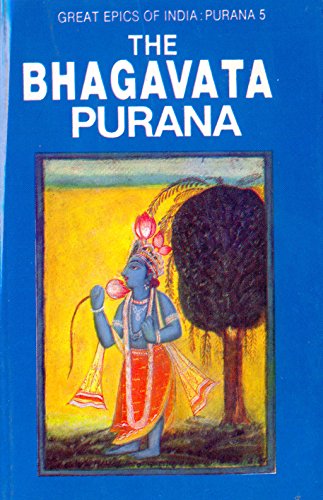
Bhagavata Purana, by Bibek Debroy
This is the tenth purana I am reviewing, and this one is also a Sattvika Purana, as the name suggests. It is placed fifth in the list of Mahapuranas and is considered to be one of the most important ones. The Purana has eighteen thousand couplets and is divided into twelve sections. Each section (skandha) has several chapters. The tenth skandha is the longest, and also the most popular as it contains various stories on Lord Krishna. This Purana, like most Puranas has been narrated to the rishis by Suta, Romaharshana’s son. Romaharshana was a disciple of sage Vedavyasa. This Purana also says that Vishnu had twenty-four incarnations, though it mentions only twenty-two of them.
Saturday, April 7, 2018
Linga Purana, by Bibek Debroy

Linga Purana, by Bibek Debroy
This is the eleventh purana I am reviewing, and it is a Tamasika Purana as I have already reviewed two sattvika puranas in a row. This turns out to be a coincidence as the Linga Purana is eleventh in the list of Mahapuranas and is the second shortest Purana as it has only eleven thousand shlokas! The Linga Purana is divided into two parts - the purva bhaga, which has a hundred and eight chapters, and the uttara bhaga which has fifty-five chapters. The language of the Linga Purana is not that simple to interpret as it is made of long sentences which makes the comprehension difficult. It does not purely consist of rituals as Tamasika Puranas should contain. It includes an assortment of stories that glorify Shiva, and also a few that glorify Vishnu. The rituals in this Purana are barely mentioned, at least in the abridged version of the Purana that I am reviewing. Information on the geography of India, and on the Solar and Lunar dynasties is the same as the Bhagvata Purana with a few minor variations.Thursday, April 5, 2018
Brahmanda Purana, by Bibek Debroy
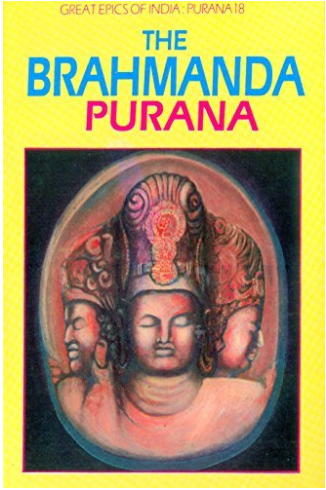
Brahmanda Purana, translated by Bibek Debroy
This is my last Mahapurana that I have to review and is naturally my last rajasika Purana. This Purana is made up of eighteen thousand shlokas which makes it a medium sized Purana. The Brahmanda Purana is divided into three sections known as the purva bhaga, madhyama bhaga and uttara bhaga. Each bhaga is further divided into subsections known as pada. The purva bhaga has the prakriya pada and anushanga pada, the madhyama bhaga has the upodghata pada and the uttara bhaga has the upasamhara pada. The whole Purana has seventy-one adhyayas (chapters) in all. This Purana has been narrated by Lord Vayu to the sages at Naimisharanya forest after a wonderful yajna took place there. The Brahmanda Purana is a Rajasika Purana in a true sense, as they glorify Brahma more than the rest of the gods and that most of the book talks about creation. The stories in this Purana are minimum, and you will find four to five stories, most of which have already been recited in the other Puranas in greater detail.Favourite Stories
Bhavishya Purana, by Bibek Debroy

Bhavishya Purana, translated by Bibek Debroy
This is the eighteenth purana I am reviewing and is a rajasika Purana. It is ninth in the list of Mahapuranas and is made of about fourteen thousand shlokas. As the name suggests, this Purana talks about the future, as bhavishyati, the Sanskrit word for ‘to be’, or ‘will happen’. This Purana has a lot of information on the future, astrological predictions and also about the medieval period and the time when the British came to India. Some puranas like the Matsya Purana, Vayu Purana and the Brahmanda Purana have borrowed their predictions from the Bhavishya Purana. As I have mentioned earlier, the Bhavishya Purana includes events that are pretty modern. Most people don’t think that such predictions were ever made. They believe that the modern events were added to the Purana in the form of predictions supposedly made by sages. There is also this confusion on what makes up this Purana, as this Purana is found in three different versions today. They are the Bhavishya Purana, the Bhavishyat Purana and the Bhavishyottara Purana. None of the three texts separately count for a Mahapurana as they do not have the five characteristics that make up for a Mahapurana. Therefore, the Bhavishya Purana is the three parts together.Favourite Stories
Sunday, April 1, 2018
Vayu Purana, by Bibek Debroy

Vayu Purana, translated by Bibek Debroy
This is the fifteenth purana I am reviewing, and it is a Tamasika purana. This Purana says that all the puranas were originally recited by Lord Brahma and that to understand the Vedas one must read the puranas. Many of you must be thinking why the Vayu Purana is considered to be a Mahapurana, as otherwise, there will be nineteen Mahapuranas. There has been an argument on whether the Shiva Purana is the fourth Purana in order or the Vayu Purana, and as people have not been able to answer this question, both puranas are added to the list. Therefore, there are nineteen Mahapuranas. The Vayu Purana says that it has been recited during the reign of King Adhisima Krishna, who was one of Parikshit’s descendants. This Purana is named the ‘Vayu Purana’, because it was recited by Vayu. It has twenty-four thousand shlokas, and is not too long. This Purana includes many stories, and there are barely any rituals stated, and that makes me wonder why it is a Tamasika Purana as it neither glorifies Shiva too much, nor does It contain many rituals.Favourite Stories
Friday, March 30, 2018
Vishnu Purana, by Bibek Debroy

Vishnu Purana, by Bibek Debroy
This is the thirteenth purana I am reviewing, and it is a sattvika purana. After this, I only have one other sattvika purana to read which is the Varaha purana. All the Puranas have been composed by Vedavyasa, except this Purana which was composed by Vedavyasa’s father Rishi Parashara. This Purana comes third in the order of Puranas and contains twenty-three thousand shlokas. The Vishnu Purana is narrated by Rishi Parashara to Rishi Maitreya who came to him to know about the creator of the universe. It is then that Rishi Parashara narrated the Vishnu Purana. The Vishnu Purana is divided into six major sections or amshas and the last amsha is relatively short. This Purana starts with the creation of the universe and goes on to talk about elements that are commonly included in most Puranas like the different kinds of hells, and the geography of the world. The first few stories are stories that I have commonly read in the rest of the sattvika Puranas. The story of Dhruva, the churning of the ocean, the story of Prahlada and the story of king Prithu are mentioned in almost all the sattvika Puranas. The rest of the stories are extremely interesting ones and are either different versions of stories or entirely new stories.Favourite Stories
Thursday, March 8, 2018
Exam Warriors, by Narendra Modi - Review

Exam Warriors, by Narendra Modi
This book was given to me a few days back by my father, who recommended I read it because he said it was educational. The title says, ‘Exam Warriors’, and I decided to read it as my exams are nearing. This book gives you various tips that would help you concentrate before, during, and after the exam. It is written by Narendra Modi, our Prime Minister, and is a very motivational book. Each chapter has a point you should follow, and all of them are valid and help. It is not boring, as the author uses day-to-day examples to prove his point, and the language is simple. All the points mentioned in the book are what most people have gone through before and during exams. I really like the first chapter, as it made me start to love the book. The first chapter says that festivals are the occasions that anyone waits for, and the same way, kids wait for their exams, and before the exams, there is a lot of talk and preparation. The book also points out that both, festivals and exams, are meant to bring out the best in us. We should not treat exams like a burden but enjoy them. The book makes such a strong point, that you start to understand what the author is trying to stay.Let me briefly go through the contents of the book.
- Mantra 1 – Exams are like festivals – Celebrate them
- Mantra 2 – Exams test your current preparation, not you. Chill!
- Mantra 3 – Laugh in, Laugh out
- Mantra 4 – Be a Warrior, not a Worrier
- Mantra 5 – Knowledge is permanent – pursue it
- Mantra 6 – Compete – with yourself
- Mantra 7 – It’s your time – make the most of it
- Mantra 8 – The Present is God’s greatest ‘Present’ – live here and now
- Mantra 9 – Technology is a great teacher – embrace it
- Mantra 10 – To do your best, take adequate rest
- Mantra 11 – Sleep is a great weapon – sharpen it
- Mantra 12 – Play to shine Mantra 13 – Be your own anchor – celebrate your own strengths
- Mantra 14 – Revise and become wise
- Mantra 15 – Little things matter – observe exam discipline
- Mantra 16 – Your exam, your methods – Choose your own style
- Mantra 17 – Presentation is key – master it
- Mantra 18 – To cheat is to be cheap
- Mantra 19 – The answer sheet is a one-way ticket – move ahead
- Mantra 20 – Discover yourself – experience all that life offers
- Mantra 21 – India is incredible – travel and explore
- Mantra 22 – As one journey ends, another begins
- Mantra 23 – Aspire, not to be, but to do
- Mantra 24 – Be grateful
- Mantra 25 – Yoga brings transformation – practice regularly My favourite points were
The book has entertaining exercises after every mantra and a page that reads ‘MY MANTRA’, which is where you can write your own principle that you follow during the exams. At the bottom of some pages, there is a QR code that if you scan, you can upload your exercise on the Narendra Modi App, and read what other exam warriors have written. The simplicity of the book is what attracts me to it. The book does not include anything that we cannot do but has simple techniques that will assist us. For a student taking exams, it is a must, as it reassures, motivates, and most importantly calms you down before an exam and helps you do much better.
This review first appeared in OpIndia on Feb 17, 2018.
Book details:
Paperback: 208 pages
Publisher: India Penguin
Language: English
ISBN-10: 0143441507
ISBN-13: 978-0143441502
Kindle IN, Amazon IN, Hindi, PayTM
© 2018, Anvita Agarwal. All rights reserved.
Sunday, February 4, 2018
Avishi by Saiswroopa Iyer
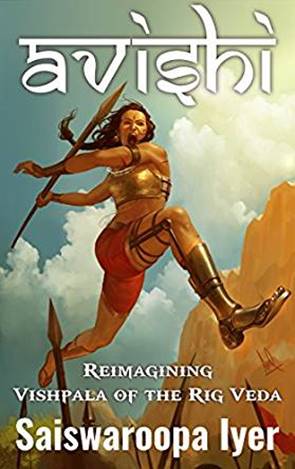
Avishi: Reimagining Vishpala of the Rig Veda
By Saiswroopa Iyer
Category:
fiction: mythology: Hinduism
Age: +13
This book is written by Saiswaroopa Iyer, and is the second book she has written. I liked her first book also a lot, so I decided to give this book a try. I also picked it because the book’s title itself was extremely interesting. The title of the book is ‘Avishi: Vishpala of Rig Veda Reimagined’. I have never heard of Vishpala, and so the title intrigued me. I love the book, and so far, I would recommend you to place it on top of your ‘To read’ list. This fabulously written book revolves around the Avishi, whose life is based on the life of Queen Vishpala, a valiant woman who fought against Khela. Khela was an evil king who wanted to change the rules and regulations that everyone followed, and twist them according to his tastes. During a battle, Vishpala loses a leg, and has it replaced with a metal leg. Even though she now has a metal leg, it does not stop her from fighting Khela at the end. I loved this book, and it has inspired me. The way Avishi fought even with serious injuries, and her leadership should be a lesson to all of us. Saiswaroopa Iyer was able to build the plot up well, as towards the end when Avishi and Khela fought, I was holding my breath, waiting for how it would end.
[this book has been included in our January 2018 edition of eGranth]
I have written a longer review of Avishi here.
© 2018, Anvita Agarwal. All rights reserved.
Thursday, February 1, 2018
Saraswati’s Intelligence by Vamsee Juluri

The
Kishkindha Chronicles: Saraswati’s Intelligence
By Vamsee Juluri
Category: fiction:
mythology: Hinduism
Age: +12
This book talks about Hanuman before he met Lord Rama. Vamsee Juluri wrote the book, and it’s the first book in the trilogy of Hanuman’s life, that he has been writing. It starts with a small race between Hanuman, Sugriva, Vali and other monkeys. Sugriva hurts himself, and spills blood, which Hanuman touches when he goes to help Sugriva. When the other monkeys saw the blood, they yelled ‘Parama Dharma Apchara’ and ran away. Parama dharma apchara was the violation of the prime duty. The people in Hanuman’s time believed in Ma Saraswati. She was the one who poured blood into their body when they were born. A single drop of blood was made of the sunlight of one hundred and eight leaves which made it so precious. Parama dharma apchara was when you spilt blood. He was thus banned from Kishkindha. He took Sugriva to Vishwamitra who healed him. They decide to accompany Vishwamitra on his journey to uncover hidden secrets in the north, followed by Sugriva. On their journey, they met the Ganeshas (elephants) who accompanied them. On their way, they discover a pack of deadly barbaric creatures who ate elephants and then used their skin to disguise themselves. After a study of the child, they realized that these creatures had to be tamed, or the parama dharma would be breached. Vamsee Juluri knows how to capture the reader’s attention and not make the book boring in between. He beautifully describes the story of Hanuman’s life. Through the whole book, he keeps talking about what is Dharma, Parama Dharma, etc. This way he also teaches us more about Indian culture, through a story. I liked the way he favored Hanuman and told us about his habits, culture, fears and his qualities. He also sympathized Vali as he was almost a servant for his mother Riksharaja.
[this book has been included in our January 2018 edition of eGranth]
© 2018, Anvita Agarwal. All rights reserved.
Subscribe to:
Posts (Atom)