
Showing posts with label Purana. Show all posts
Showing posts with label Purana. Show all posts
Monday, April 23, 2018

Sunday, April 22, 2018
Skanda Purana, by Bibek Debroy

Skanda Purana, translated by Bibek Debroy
This is the sixteenth purana I am reviewing and is also my last Tamasika purana. I love this Purana and it is my favourite purana as it has many stories. Puranas are named thus as they are of purakala (ancient) times and also because they complement (purana) the knowledge of the Vedas. The Skanda Purana is the thirteenth Purana in the list and is the longest Purana with eighty-one thousand shlokas. It is nine times the length of the shortest purana and about four to five times the length of a purana that is average in length. It is believed that the Skanda Purana was the first Purana to be written, as quite a few of the stories are the same ones that are mentioned in the Mahabharata. This Purana is divided into seven parts or khandas, which are as follows:- Maheshvara khanda – the part relating to Shiva
- Vishnu Khanda – the part relating to Vishnu
- Brahma Khanda – the part relating to Brahma
- Kashi Khanda – the part relating to the holy city of Kashi or Varanasi
- Avanti Khanda – the part relating to the kingdom of Avanti
- Nagara Khanda – the part relating to the cities (nagara)
- Prabhasa Khanda – the part relating to the holy tirtha (place of pilgrimage) of Prabhasa
Wednesday, April 18, 2018
Varaha Purana, by Bibek Debroy

Varaha Purana, translated by Bibek Debroy
This is the fourteenth purana I am reviewing and is the last of the sattvika Puranas. This Purana is slightly longer than the Vishnu Purana, and is divided into two sections, the purva bhaga and the uttara bhaga. This Purana is known as the Varaha Purana because this Purana was narrated by Vishnu in his Varaha avatara or form to the Earth on her request. This Purana does not talk about any specific topic but include the usual information that any Purana should have, and then narrates stories according to the questions asked by Mother Earth. The stories in this Purana include many stories on the different tithis and also on the different sites of pilgrimage, and also include a lot on why Mathura is one of the holiest places one can visit. This Purana also points out what acts will displease Lord Vishnu, and how would you make an idol.Favourite Stories
Monday, April 16, 2018
Agni Purana, translated by Bibek Debroy

Agni Purana, translated by Bibek Debroy
This is the twelfth purana I am reviewing, and this too is a tamasika purana. The Agni Purana was narrated by Agni, the god of fire, to Sage Vashishta, who then narrated it to Rishi Vyasadev. This is how the purana got its name. Unlike most puranas, the Agni purana does not have any parts, or bhagas. It is simply divided into three hundred and eighty-three chapters. The last chapter is considered to be the most interesting chapter as it talks about the Advaita brahmajnana, which teaches the union of the individual human soul (atman) with the brahman, the divine essence. This is very important and interesting because only when the atman and the brahman merge will one experience true bliss. The Agni Purana is an exception as the five characteristics that a Purana should contain are not all there, as the Agni Purana contains more of rituals, practices, omens, astrology, etc. This Purana is eighth in the list of Mahapuranas and contains fifteen and a half thousand shlokas.Saturday, April 14, 2018
Bhagavata Purana, by Bibek Debroy
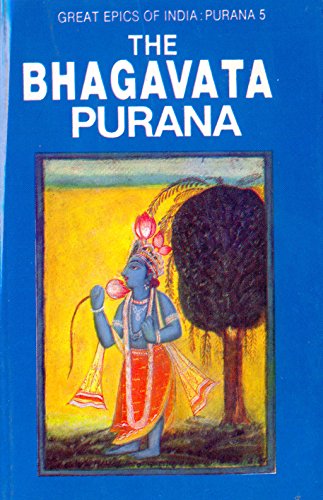
Bhagavata Purana, by Bibek Debroy
This is the tenth purana I am reviewing, and this one is also a Sattvika Purana, as the name suggests. It is placed fifth in the list of Mahapuranas and is considered to be one of the most important ones. The Purana has eighteen thousand couplets and is divided into twelve sections. Each section (skandha) has several chapters. The tenth skandha is the longest, and also the most popular as it contains various stories on Lord Krishna. This Purana, like most Puranas has been narrated to the rishis by Suta, Romaharshana’s son. Romaharshana was a disciple of sage Vedavyasa. This Purana also says that Vishnu had twenty-four incarnations, though it mentions only twenty-two of them.
Saturday, April 7, 2018
Linga Purana, by Bibek Debroy

Linga Purana, by Bibek Debroy
This is the eleventh purana I am reviewing, and it is a Tamasika Purana as I have already reviewed two sattvika puranas in a row. This turns out to be a coincidence as the Linga Purana is eleventh in the list of Mahapuranas and is the second shortest Purana as it has only eleven thousand shlokas! The Linga Purana is divided into two parts - the purva bhaga, which has a hundred and eight chapters, and the uttara bhaga which has fifty-five chapters. The language of the Linga Purana is not that simple to interpret as it is made of long sentences which makes the comprehension difficult. It does not purely consist of rituals as Tamasika Puranas should contain. It includes an assortment of stories that glorify Shiva, and also a few that glorify Vishnu. The rituals in this Purana are barely mentioned, at least in the abridged version of the Purana that I am reviewing. Information on the geography of India, and on the Solar and Lunar dynasties is the same as the Bhagvata Purana with a few minor variations.Thursday, April 5, 2018
Brahmanda Purana, by Bibek Debroy
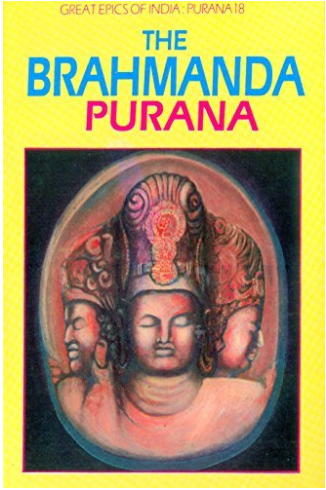
Brahmanda Purana, translated by Bibek Debroy
This is my last Mahapurana that I have to review and is naturally my last rajasika Purana. This Purana is made up of eighteen thousand shlokas which makes it a medium sized Purana. The Brahmanda Purana is divided into three sections known as the purva bhaga, madhyama bhaga and uttara bhaga. Each bhaga is further divided into subsections known as pada. The purva bhaga has the prakriya pada and anushanga pada, the madhyama bhaga has the upodghata pada and the uttara bhaga has the upasamhara pada. The whole Purana has seventy-one adhyayas (chapters) in all. This Purana has been narrated by Lord Vayu to the sages at Naimisharanya forest after a wonderful yajna took place there. The Brahmanda Purana is a Rajasika Purana in a true sense, as they glorify Brahma more than the rest of the gods and that most of the book talks about creation. The stories in this Purana are minimum, and you will find four to five stories, most of which have already been recited in the other Puranas in greater detail.Favourite Stories
Bhavishya Purana, by Bibek Debroy

Bhavishya Purana, translated by Bibek Debroy
This is the eighteenth purana I am reviewing and is a rajasika Purana. It is ninth in the list of Mahapuranas and is made of about fourteen thousand shlokas. As the name suggests, this Purana talks about the future, as bhavishyati, the Sanskrit word for ‘to be’, or ‘will happen’. This Purana has a lot of information on the future, astrological predictions and also about the medieval period and the time when the British came to India. Some puranas like the Matsya Purana, Vayu Purana and the Brahmanda Purana have borrowed their predictions from the Bhavishya Purana. As I have mentioned earlier, the Bhavishya Purana includes events that are pretty modern. Most people don’t think that such predictions were ever made. They believe that the modern events were added to the Purana in the form of predictions supposedly made by sages. There is also this confusion on what makes up this Purana, as this Purana is found in three different versions today. They are the Bhavishya Purana, the Bhavishyat Purana and the Bhavishyottara Purana. None of the three texts separately count for a Mahapurana as they do not have the five characteristics that make up for a Mahapurana. Therefore, the Bhavishya Purana is the three parts together.Favourite Stories
Sunday, April 1, 2018
Vayu Purana, by Bibek Debroy

Vayu Purana, translated by Bibek Debroy
This is the fifteenth purana I am reviewing, and it is a Tamasika purana. This Purana says that all the puranas were originally recited by Lord Brahma and that to understand the Vedas one must read the puranas. Many of you must be thinking why the Vayu Purana is considered to be a Mahapurana, as otherwise, there will be nineteen Mahapuranas. There has been an argument on whether the Shiva Purana is the fourth Purana in order or the Vayu Purana, and as people have not been able to answer this question, both puranas are added to the list. Therefore, there are nineteen Mahapuranas. The Vayu Purana says that it has been recited during the reign of King Adhisima Krishna, who was one of Parikshit’s descendants. This Purana is named the ‘Vayu Purana’, because it was recited by Vayu. It has twenty-four thousand shlokas, and is not too long. This Purana includes many stories, and there are barely any rituals stated, and that makes me wonder why it is a Tamasika Purana as it neither glorifies Shiva too much, nor does It contain many rituals.Favourite Stories
Friday, March 30, 2018
Vishnu Purana, by Bibek Debroy

Vishnu Purana, by Bibek Debroy
This is the thirteenth purana I am reviewing, and it is a sattvika purana. After this, I only have one other sattvika purana to read which is the Varaha purana. All the Puranas have been composed by Vedavyasa, except this Purana which was composed by Vedavyasa’s father Rishi Parashara. This Purana comes third in the order of Puranas and contains twenty-three thousand shlokas. The Vishnu Purana is narrated by Rishi Parashara to Rishi Maitreya who came to him to know about the creator of the universe. It is then that Rishi Parashara narrated the Vishnu Purana. The Vishnu Purana is divided into six major sections or amshas and the last amsha is relatively short. This Purana starts with the creation of the universe and goes on to talk about elements that are commonly included in most Puranas like the different kinds of hells, and the geography of the world. The first few stories are stories that I have commonly read in the rest of the sattvika Puranas. The story of Dhruva, the churning of the ocean, the story of Prahlada and the story of king Prithu are mentioned in almost all the sattvika Puranas. The rest of the stories are extremely interesting ones and are either different versions of stories or entirely new stories.Favourite Stories
Tuesday, January 2, 2018
Garuda Purana, by Bibek Debroy

Garuda Purana, translated by Bibek Debroy
This is the ninth Purana I am reviewing, and as you all might have guessed, is a Sattvika Purana. It is listed seventeenth in the list of Puranas, and is nineteen thousand shlokas long. It is divided into two parts, the Purva khanda, and the Uttara khanda. The Purva khanda has two hundred and thirty-four adhyayas (chapters), and the Uttara Khanda has only forty-five adhyayas. This Purana was recited to Rishi Kashyapa by the great bird Garuda himself. This Purana says that Vishnu had twenty-two incarnations, not ten! The names of the incarnations are as listed below:- Kumara (young boy)
- Varaha (boar)
- Devarishi (great sage)
- Nara and Narayana
- Sage Kapila
- Sage Dattatreya
- Son of Ruchi and Akuti
- Urukrama (son of Nabhi and Meru)
- King Prithu
- Matsya (fish)
- Kurma (turtle)
- Dhanavantari (physician of the gods)
- Mohini avatara
- Narasimha
- Vamana
- Parashurama
- Vedavyasa
- Narada
- Rama
- Krishna
- Buddha
- Kalki (yet to come)
Thursday, December 7, 2017
Markandeya Purana, by Bibek Debroy

The Markandeya Purana, translated by Bibek Debroy
This is the eighth Purana I am reviewing, and it is a Rajasika Purana as it goes into detail about the process of creation. It is the shortest Purana and is only nine thousand shlokas long. This Purana talks in detail about a few unanswered questions from the Mahabharata. When you read the Mahabharata, questions will start popping up like, ‘Why did Draupadi have five husbands?’, ‘Why did Draupadi’s sons die in the dead of night instead of on the battlefield?’ This Purana has answered these questions. It has many stories, but focuses more on the histories of the different Manvantaras (duration of a Manu). The Markandeya Purana has 137 chapters. Towards the end of this Purana, it starts narrating stories of the goddess Chandi. In the original text, this extends from chapter eighty-one to ninety-three.Sunday, November 26, 2017
Kurma Purana, by Bibek Debroy

Kurma Purana, translated by Bibek Debroy
This is the seventh Purana that I am reviewing. It is the fifteenth Purana in order, and is a Tamasika Purana.You must be a little confused at this point. Doesn’t the name clearly state ‘Kurma’ Purana, and one of Vishnu’s avatara’s was the Kuma avatara? Here is where everyone gets confused. This Purana got its name because Lord Vishnu narrated this Purana when he was in the form of a turtle (kurma), hence Kurma Purana. This Purana is seventeen thousand shlokas long, and is divided into four samhitas (sections). They are the Brahmi samhita, the Bhagvati samhita, the Souri samhita, and the Vaishnavi samhita. Unfortunately, only the Brahmi Samhita is available to us now, and goes by the name of the Kurma Purana. The Brahmi samhita is divided into two parts, which are the Purva bhaga and the Upari bhaga. The Purva bhaga has fifty-two chapters, and the Upari bhaga has forty-four chapters.
Monday, November 6, 2017
Narada Purana, by Bibek Debroy

The Narada Purana, translated by Bibek Debroy
This is the sixth Purana I have read, and in my opinion, it is my third favorite Purana. It is not too long, nor is it too long, it is just right. It only consists of about twenty-five thousand shlokas, and is not terribly long. It is the sixth Purana in order, and has two parts to it. They are the Purva Bhaga (first part), and the Uttara Bhaga (the subsequent part). It has thirty-eight chapters in the whole text. It is a sattvika Purana as you might have guessed, as the name itself says ‘Narada Purana’, and Narada was a great devotee of Lord Vishnu. It is called so, because the Purana was originally recited by Sage Narada himself. Before I start going into the details, read this shloka and recite it, to purify the heart.
नारायणं नमस्कृत्य नरं चैव नरोत्तमम् |
देवीं सरस्वतीं व्यासं ततो जयमुदीरयेत् ||
Narayanam namaskritya naranchaiva narottamam
devim sarasvatinchaiva tato Jayamudirayet
This shloka means that before reading these texts, one must pray to Nara and Narayana, the best of all human beings. One should also pray to Maa Sarasvati, the goddesses of learning and wisdom. It is only after doing so that one must begin reading the sacred texts known as Jaya. Jaya was first used to refer to the Mahabharata, but it is now said that it also includes the Ramayana and the eighteen Mahapuranas as well.
MY FAVOURITE STORIES
The Narada Purana was narrated by Narada to Sanatkumara, one of Lord Brahma’s sons. The Narada Purana must not be revealed to anyone who is evil and does not respect religion. It starts by explaining how the Narada Purana came to be recited, and then moves onto creation. It subsequently talks about the geography of India and the blessing it is to be born in Bharatvarsha, commonly known as India. This Purana talks a lot about the different ways to obtain punya, and the kinds of blessings you receive if you show any kind of devotion to Lord Vishnu whether it be knowingly, or unknowingly. It also tells you what are the three things important to Vishnu. They are the Tulsi (basil) bush, the Ganga, and the dust from the feet of any devotee of Vishnu. There were many stories in the Purana. Some of them are:- Aditi’s Tapasya
- Vali and the Dwarf Incarnation
- Sumati
- Bhadrashila
- Devamali
- Kanika
My favorite ones are the ones about Sumati and Bhadrashila. Both the stories emphasize the punya you accumulate if you serve Lord Vishnu in any way, be it knowingly or unknowingly. Let me narrate both to you.
Sumati
Many years ago, during the satya yuga, there lived a good and wise king called Sumati. He was from the lunar dynasty, and was righteous. He was a great devotee of Lord Vishnu. He had a wife called Satyamati. They regularly performed the dhvjarohana vrata. On those days, his wife would dance in temples. Both were Jatismaras, and could remember their past life. One day, a sage called Vibhandaka and his disciples came to visit them. They questioned Sumati, “Why do you perform the dhvjarohana vrata and why does your wife dance in such occasions?” Sumati replied that it all related to his past life. In his earlier life, Sumati was an evil shudra called Matuli. He was a sinner and used to harm people. Due to this, he was abandoned by his family and friends. Matuli then retired into the forest. One day, Matuli was very hungry and thirsty. He came upon a pond, near which was a Vishnu temple. He quenched his thirst and ate Lotus stalks that satisfied his hunger. He rebuilt parts of the temple and built a house near it, and became a hunter. Twenty years passed. He married a hunter’s daughter named Kokilini, who too was evil and had been deserted by her family. They often drank a lot of wine and danced in the temple. During one such time, they died. Yama’s servants came to take them, but Vishnu’s messengers did not allow them to because Vishnu liked them dancing, and after rebuilding the temple, Matuli had hoisted a flag that was performing the dhvjarohana vrata. They were taken to heaven and then reborn as Sumati and Satyamati. That was why they continued performing the vrata and dancing in the temple.
Bhadrashila
Bhadrashila was the son of Sage Galava. From his youth, Bhadrashila was devoted to Lord Vishnu and would make clay models of the Lord. He would tell everyone the virtues of observing the vrata on the Ekadashi tithi. Sage Galava asked his son why he observed that vrata. Bhadrashila was a Jatismara so he recounted his past life to answer his father’s question. He was a king named Dharmakirti in his past life, from the lunar dynasty. He ruled for nine thousand years performing good deeds as well as bad ones. Later, he only started to perform bad deeds. Taking a cue from the king, even his people started performing only bad deeds. A king is entitled to one -sixth of their people’s earnings. The same way, Dharmakirti was entitled to one-sixth of his people’s bad deeds. He slowly exhausted all his punya. One day, he went hunting, and was feeling hungry. Some pilgrims arrived at the spot where he was resting and decided to observe the Ekadashi vrata. He also decided to observe it with them. He was so hungry that he died by morning. When he was taken to Yama’s abode, and Yama got to know that he had performed the Ekadashi Vrata, he let him free to heaven. Therefore, he still observed the Ekadashi vrata.
Anyone who reads a single couplet of the Purana is forgiven of all his sins. Someone who reads the entire chapter acquires the punya obtained from various yajnas. If this Purana is kept in the house, ghosts and thieves avoid this house. Arson and theft never happen in the household. I loved this Purana because it talked a lot about Vishnu, and the story of creation was different in this Purana. It had stories, as well as facts, but none of it was like history, but more like one of the storybooks you read. Interesting and full of stories. I love then parts about the different vratas and the history behind many kings. I have loved this Purana because it talks about important things about our culture in a stimulating way.
Kindle IN, Kindle US
© 2017, Anvita Agarwal. All rights reserved.
Thursday, November 2, 2017
Brahmavaivarta Purana, by Bibek Debroy

Brahmavaivarta Purana, translated by Bibek Debroy
This is the fifth purana review I’m writing, and is the second Rajasika Purana I am going to be writing about. Rajasika Puranas are Mahapuranas that glorify Brahma, instead of Lord Shiva or Lord Vishnu. If you want to know more about the Puranas you can go to my first Purana review, of the Shiva Purana. This is a unique Purana as it is the only Purana that has referred to Krishna as ब्राह्मण (Brahman), the divine essence. We cannot describe the divine essence brahman, as it has no traits that can be described. It is said that it is from him other gods and goddesses. They have then described the process of creation that is pretty much the same. There are four parts to it. They are the Brahma khanda, the Prakriti khanda, the Ganesha khanda and the Sri-krishna-janma khanda. The only part that I found a little unusual is that they have mentioned that at the start that Saraswati and Lakshmi were married to Lord Narayana! I have usually heard that Ma Saraswati was married to Brahma. They have said that Brahma was married to Savitri. This Mahapurana is eighth in the list of the Puranas’, and consists of eighteen thousand shlokas.MY FAVOURITE STORIES
The first part of the Purana, the Brahma khanda talks about the creation of the gods, goddesses, men, etc. The Prakriti khanda talks about the different ways through which you can worship the gods and goddesses and their nature. It also describes the different kinds of hells, heavens, and the cures of different diseases. The Ganesha khanda, as the name suggests, is more about Lord Ganesha and some common stories associated with him. It also talks about the various hymns to him and his conversations with Sage Bhrigu. The last khanda, the Sri-krishna-janma khanda, is more on Lord Krishna’s birth and deeds. I liked the Ganesha khanda the most, because I have always loved stories that are related to Lord Ganesha. From the Ganesha khanda, my favorite stories are the ones about how Ganesha’s head was cut off, and how Ganesha came to be known as Ekadanta.How Ganesha’s head was cut off:
Parvati wanted a child, so she performed the punyaka vrata, and Lord Krishna himself took birth as her child. When the child was born, many gifts were brought, and many people came to visit the child. Among those people was Shani (Saturn), the son of Surya. When he approached the child, he bent his head and did not look at the child. When Parvati questioned him on his strange behavior, Shani explained, “I have been cursed that whatever I directly look at will get destroyed immediately. I was cursed by Chitraratha, the daughter of the gandharva king, and my wife, as I neglected her.” Parvati took it lightly and laughed it off. She asked him to look at her. Tempted, Shani looked at the child, not Parvati from the corner of his eye. The damage was done. The next moment the child lay headless in Parvati’s lap. Parvati was shocked, and fainted. Krishna mounted Garuda and went northwards. He found a bull elephant sleeping. He sliced the head of the elephant, who was Airavata, and rejoined it with the child’s body. Parvati was happy, but she cursed Shani that he would be angahina, without a limb. That child was none other than Lord Ganesha.How Ganesha came to be known as Ekadant:
Parashurama was the son of Sage Jamadagni, and Jamadagni had been killed by Kartavirya Arjuna who was a kshatriya. Parashurama therefore vowed to get rid of all the kshatriyas in the world. As Shiva was Parashurama’s guru, after performing his vow, he decided to pay his respects to Shiva. He went to Shiva’s abode, Kailasha, but was stopped from entering it by a respectful Ganesha. He said that Lord Shiva was sleeping, and Parashurama ought to wait for a while. Parashurama tried making Ganesha see reason, but he later got angry when Ganesha refused. They started fighting, and Ganesha extended his trunk to a long length and hurled Parashurama onto Earth. Seeing his chance, Parashurama let the parashu loose. The parashu was a weapon given by Lord Shiva himself to him, so it could not be completely repulsed. It broke Ganesha’s left tusk. Since he has one (eka) tusk (danta), he came to be known as Ekadanta.I really enjoyed this Purana and these two stories. They are crisp and well written. I enjoyed every single word of it, and did not feel bored. These abridged translations of the Puranas help you know the basic information you should be knowing about the Purana and may help you understand the unabridged ones better. They are not very long, only a hundred pages long and can be completed in two hours or so if you read them without a break. I loved the short stories as they were interesting. Each Purana has different versions of the same story. When you read the story about Ganesha that I have mentioned above, you will find them very different from what you might have heard of the same tale. I have read five Purana’s so far, and each Purana has been more interesting than the other.
© 2017, Anvita Agarwal. All rights reserved.
Saturday, June 3, 2017
Vamana Purana, by Bibek Debroy

Vamana Purana, translated by Bibek Debroy
VAMANA PURANAThe Vamana Purana written by Bibek Debroy, is full of stories and interesting tales from the times of the asuras and the gods. This is the fourth review of the Puranas that I’ve written, so if you want any detailed information on what a Purana is, you can see them on my blog. Before I narrate a few stories that would catch your interest, I will tell you a bit about the Vamana Purana. The Vamana Purana is one of the eighteen Mahapuranas, and also a rajasika, as it glorifies Brahma more than Vishnu and Shiva. It is not too long, as it only consists of ten thousand couplets. The ten thousand couplets are divided into a first part, Purva Bhaga and a second part called the Uttara Bhaga. The Vamana Purana has ninety-five chapters in all.
Sunday, April 30, 2017
Matsya Purana, by Bibek Debroy

Matsya Purana
Translated by Bibek DebroyThe Matsya Purana is my third review of the Puranas written by Bibek Debroy. He had translated the unabridged version of the whole Mahabharata in English, with eleven volumes, the eleventh volume being the Harivamsha. Earlier he has translated an abridged version of the eighteen Mahapuranas. I have reviewed two so far, and this is the third I’m going to be reviewing. To know the basic facts on the Puranas, you can read the earlier reviews I’ve written. Let me start by telling you the basics you should know about the Matsya Purana. Firstly, the Matsya Purana is the sixteenth Purana in order, not of importance. Secondly, the Matsya Purana is a tamasika Purana, which means it praises Shiva more, though it has the name of one of Vishnu’s avataras. In reality, it is Vishnu who is narrating this Purana to Vaivasvata Manu. It consists of fifteen thousand shlokas in all. It has a few similar stories to the Shiva Purana. In this Purana, I didn’t find the stories as interesting as a few interesting things shared in the book. I’ll mention them to you
Firstly I found the facts on giving daan very interesting. You will come upon them when you have read most of the book and you are nearing the end. There are sixteen ways of giving daan. All of them are listed below.
- Tulapurusha : The donator of the daan should sit on the scale and gold should be placed on the other side until both the scales are balanced equally.
- Hiranyagarbha : A pot full of gold is donated.
- Brahmanda: A universe made out of gold is donated.
- Kalpapadapa: A tree made of gold is donated.
- Gosahasra: A thousand cows are donated.
- Kamadhenu: A cow and a calf made of gold are donated.
- Hiranyashva: A horse made of gold is donated.
- Ashvaratha: A horse and four chariots constructed of gold are donated.
- Hemahastiratha: An elephant and a chariot made of gold are donated.
- Panchalangalaka: Ten ploughs are donated, five made of gold and five made of wood.
- Dhara: A golden model of the Earth is donated.
- Vishvachakra: A golden model of the Universe in the form of a wheel is donated.
- Mahakalapalata: Ten creepers of gold are donated.
- Saptasagara: Seven pits are made in the ground, representing seven oceans. The first pit has a little bit of salt, the second milk, the third clarified butter, the fourth molasses, the fifth curds, the sixth sugar and the seventh holy water. An idol of a god or goddess is placed in each. Brahma in the first, Vishnu in the second, Shiva in the third, Surya in the fourth, Yama in the fifth, Lakshmi in the sixth and Parvati in the seventh. The pits are then covered with jewels to the brim.
- Ratnadhenu: A cow made of gold with different parts made of jewels is donated.
- Mahabhutaghata: A pot made of gold filled with jewels is donated.
The second thing I loved the most was when he described the time a house should be built. The points you have to remember while building a house are:
- The building of a house should never happen during Chaitra, as the person who does this will inflict a terrible disease.
- The month of Vaishakha is a good time, as a person will have many cows.
- An individual who begins in Agrahayana has full granaries, in Magha attains all sorts of riches and in Falguna obtains gold and sons.
- Servants and animals are owned by the person who starts in the month of Ashada.
- If you start to build a house in Jyaishta and Shravana you will die soon; in Bhadra you will suffer all manner of losses; in Ashvina your wife will die and in Pousha your goods will be stolen.
The last part I liked was when Bibek Debroy talks about ब्राह्मण (Brahman). During the creation of the universe, there was darkness and the Brahman. We cannot describe the divine essence brahman, as it has no traits that can be described. The Matsya Purana says that the brahman repelled all the darkness, and divided itself into three parts. Those three parts are known as Brahma, Vishnu and Shiva. All the Puranas have different versions on the creation of the Universe, if you happen to read them. This I found to be the most interesting of the versions I’ve read of. It talks about the Brahman, which is the divine essence said to be formless. This is the part I enjoyed the most. It told me about Brahman, a term I had vaguely heard about.
These parts were my favourite. This book was one of the best from the other two Puranas. This is easy to understand, and can be read by kids. It gives us a lot of information on our ancient texts, the Puranas. Bibek Debroy’s Mahabharata, though long is written beautifully in simple English. One should really read the books written by Bibek Debroy. Also read my other two reviews on the Puranas:
Kindle India, Kindle US,
Preview:
© 2017, Anvita Agarwal.
Sunday, April 16, 2017
Padma Purana, Translated by Bibek Debroy

Padma Purana (Great Epics of India: Puranas Book 2)
Translated by by Bibek Debroy, Dipavali DebroyNamaste.
I am Anvita and I would like to share with you some information about the Puranas, one of the sacred texts of Hinduism. Before I start, I would like to give you a general idea of a Purana. A Purana is one of the sacred texts of Hinduism. The Mahabharata, the Ramayana and the Puranas are together known as Itihasa, something that happened in the past. As we all know, the Ramayana was written by Sage Valmiki and the Mahabharata was composed by Krishna Dvaipayana. The Puranas were also written by the same person, Krishna Dvaipayana. This great sage was the offspring of Satyavati and Rishi Parashara. He was originally named Krishna Dvaipayana, as he his complection was dark (Krishna) and he was born on an island (Dvaipayana). Later on, he was titled Vedavyasa or Vyasadeva as he divided one of the most sacred texts of Hinduism, the Vedas. Hence, he was known as the one who divided the Vedas (Vyasa = dividing). There are eighteen Puranas that are given more importance, because of five characteristics they contain. The Puranas are as follows:
- Brahma Purana
- Padma Purana
- Vishnu Purana
- Shiva Purana
- Bhagvata Purana
- Narada Purana
- Markandeya Purana
- Agni Purana
- Bhavishya Purana
- Brahmavaivarta Purana
- Linga Purana
- Varaha Purana
- Skanda Purana
- Vamana Purana
- Kurma Purana
- Matsya Purana
- Garuda Purana
- Brahmanda Purana
The characteristics are listed below,
1. The original creation of the universe (sarga).
2. The periodical destruction and recreation of the universe (pratisarga)
3. The different eras (manvantara)
4. The history of the solar dynasty (suryavamsha) and the luna dynasty (chandravamsha)
5. The royal genealogies (vamshanucharita)
The Padma Purana is the second longest purana with fifty-five thousand couplets. The Padma purana is divided into sections – Srishti kanda, bhumi khanda, svarga khanda, patala khanda and Uttara khanda. The Padma Purana is a Sattvika Purana, as it glorifies Lord Vishnu. The Padma Purana has many stories and less facts, which makes it extremely interesting. Bibek Debroy starts the purana with the bhumi kanda. He usually starts the puranas with Lomaharshana narrating the Purana to a group of sages.
There are many stories, most of them, which I enjoyed, but the best stories to me, are two of them.
These stories come when you have finished about half of the whole book. They come during the story of Sage Chyavana. Sage Chyavana decides to go on a pilgrimage to visit all the tirthas, as he believed, if he visited them, he would attain true knowledge. On his journey, he stopped to rest under a banyan tree. The Banyan tree was the house to a family of parrots. The male and female parrot had four sons. Every day they would go to different places in search of food. Their names were Ujjvala, Samujjvala, Vijjvala and Kapinjala, respectively. On this particular day, they happened to visit places where strange sights met them. They would narrate their story, and ask their father Kunjala to explain the strange sights they saw. I enjoyed the stories of Samujjvala and Kapinjala.
Samujjvala’s story: He went to the Himalayas to search for food, in one particular valley that was frequently visited by sages and apsaras. There was a lake called the Manasa sarovara. He waited there and several swans arrived. Some were black and the others were white. They were followed by fierce looking, ugly women. The black swans went to bathe. The women stood outside and laughed. A large white swan came out of the water followed by three swans. They took off, followed by the other white swans. Meanwhile a hunter arrived at the spot and sat down, followed by his wife. The wife didn’t recognize the husband, as he was better looking than before. The husband explained to her that he had bathed in the Narmada sangam, the meeting point of the rivers Narmada and Reva. He guided his wife there, and the swans with the women followed. The swans bathed, and the black swans became snow – white. The women when did so died.
The explanation for this: Narada visited Indra in heaven. Indra questioned Narada about which of all the tirthas was the best. Narada was confused and couldn’t answer it so Indra summoned all the tirthas to his court. He posed a question to the tirthas that which one could purify the worst of sins. The tirthas suggested Prayaga, Varanasi, Pushkara and Arghyatirtha. There is a story connected to this. One day, a kshatriya named Vidura killed a brahmana in a fit of anger. This was a great sin, so he visited many tirthas, but his sin wasn’t forgiven. On his journey, he met a man named Chandrasharma. He had killed his teacher, and he too had visited many tirthas but his sin had not been forgiven. They decided to travel together. They met two more men, Vedasharma and Vanjula. One had married someone he should not have and the other was a drunkard. They journeyed together and a sage advised them to visit Prayaga, Arghyatirtha, Varanasi and Pushkara. They visited the tirthas and their sins were so bad that the tirthas became contaminated and followed the sinners in the form of black swans. The tirthas that were not contaminated followed the sinners in the form of white swans. The whole retinue went to the Manasa sarovara. This tirtha also took the form of a black swan and eventually made their way to the confluence of the rivers Narmada and Reva. When they bathed in this tirtha, they all were cleansed. The four women were the personifications of the four sins of the four women. When the sinners were pardoned, the sins died. The most sacred tirtha of all is the tirtha present at the confluence of the rivers Reva and Narmada, known as the Kubjatirtha.
Kapinjala’s story: He went to Mount Kailasa in search of food. Near one particular pond, he saw a woman seated on a boulder crying. From her tears sprouted lotuses. A sage picked those lotuses and offered them to Lord Shiva. After doing this, he danced and then sat and cried.
Explanation for this: There was an asura named Vihunda. He wanted to take revenge for his father’s death. He started doing a terrible tapasya. The gods were terrified and prayed to Vishnu. To help the gods, Vishnu took the form of a beautiful woman and distracted Vihunda. He fell hopelessly in love and asked Vishnu if he could marry her. Vishnu agreed and told Vihunda that first he would have to worship Shiva with seven crore Kamoda flowers, make a garland of them and give it to her. He agreed. He searched for Kamoda flowers but could not find them. His guru Sukracharya told him that Kamoda flowers didn’t grow on trees. They sprouted when a woman named Kamoda laughed, but when she cries, the flowers that emerge should not be touched. He told him where Kamoda could be found. The gods had no intention of allowing Vihunda to get the flowers. They told her that Vishnu was going to leave heaven and come down to Earth. The thought of Vishnu leaving heaven was so depressing that she started crying. Vihunda, not realizing that these were the flowers had sprouted from Kamoda’s crying, collected the flowers and worshipped Shiva. This act angered Parvati that she killed him.
The rest of the Padma Purana has stories of how punya can be obtained by simply cleaning Vishnu’s idol or removing darkness from it. A person who hears just the recitation of one shloka of the Padma Purana is forgiven of all his sins he may commit in the space of a single day. A lot of punya is also obtained if one donates a thousand cows to a brahmana or if he hears the recitation of one chapter of the purana. In the Kali yuga, punya can be obtained by listening to the whole Padma Purana being recited, giving alms or doing tapasya.
Kindle India, Kindle US,
Review of Shiva Purana
Preview:
© 2017, Anvita Agarwal. All rights reserved.
Friday, April 7, 2017
Shiva Purana, by Bibek Debroy

Shiva Purana (Great Epics of India: Puranas Book 4)
Translated by Bibek Debroy, Dipavali DebroA Purana - it does seem to ring a bell. A Purana is one of the sacred texts of Hindus. There are 18 of them. In order, they are:
- Brahma Purana
- Padma Purana
- Vishnu Purana
- Shiva Purana
- Bhagavata Purana
- Narada Purana
- Markandeya Purana
- Agni Purana
- Bhavishya Purana
- Brahmavaivarta Purana
- Linga Purana
- Varaha Purana
- Skanda Purana
- Vamana Purana
- Kurma Purana
- Matsya Purana
- Garuda Purana
- Brahmanda Purana
These Puranas are known as the Mahapuranas. They were written by Vedvyasa Krishna Dvaipayana (Vedvyasa is just a title holder, not a single person. There have been twenty-eight Veda Vyasa. Krishna Dvaipayana was the twenty-eighth.) It hasn’t completely been written by Krishna Dvaipayana. Other sages and learned people also collaborated and together it was written. A Mahapurana specifically should contain five subjects or lakshanas. They are:
- The creation of the universe (sarga).
- The periodical destruction and recreation (pratisarga).
- The 14 different eras (manvantaras).
- The histories of the Lunar dynasty (Chandra vamsha) and the Solar dynasty (Surya vamsha).
- The royal genealogies (vamshanucharita).
This time, I’m going to talk about the Shiva Purana. In some cases, the Shiva Purana is said to be the fourth one, but in others the Vayu Purana is said to be the fourth one. The Shiva purana has 24,000 shlokas. The Shiva Purana is said to be recited by Romaharshana, Krishna Dvaipayana’s disciple. The first part of the Shiva Purana talks about the Trinity in Hindu gods, which consists of Brahma the creator, Vishnu the preserver and Shiva the destroyer. It then continues by telling stories. I would like to share with you two of my favourites.
Why do we not use the Champak flower to worship Lord Shiva: There was a Shiva temple in the land of Gokarna and Narada decided to visit it. As he was visiting it, he saw a Brahmana about to pluck a Champak flower. Seeing Narada, the Brahmana stopped himself from doing so. Casually, Narada asked the Brahmana what he was doing. The Brahmana replied that he was going to beg for alms. Narada then went and prayed in the temple. Meanwhile, the Brahmana quickly plucked the flowers and hid them in his basket, which was well covered. Narada emerged out of the temple and saw the Brahmana again. He again imposed the same question. The Brahmana lied a second time that he did not receive alms. Suspicious, Narada asked the Champak tree if flowers had been plucked from its tree. The champak tree denied it. Suspicious, Narada again entered the temple and found freshly picked Champak flowers. He asked a devotee inside who had put them. The devotee answered that an evil Brahmana had put them. Shiva would then bless him and the evil Brahmana had now brainwashed the king and had done many evil things. Narada questioned Shiva how he could have allowed the Brahmana to do this. Shiva said that he was helpless if anyone worshipped him with Champak flowers. He couldn’t resist them. Narada hereby cursed the Champak flower that it wouldn’t be used to worship Shiva as it had lied.
Parvati becomes Gauri: Two asuras, Shumbha and Nishumbha obtained a boon from Brahma that they may not be killed by a male. After seeking the boon, they started wreaking havoc in all three worlds. In despair, Brahma went to Shiva and asked him to invoke Parvati, so that a female would be born from Parvati who would kill the asuras. Shiva agreed to the idea. When Shiva met Parvati and playfully addressed her as ‘Kali’ meaning black or dark skinned. Hurt by the term used to address her, she decided to pray to Brahma for many years to become fair She meditated for many years. One day, a tiger saw her and thought her to be a good meal. It patiently waited for her. Parvati, thinking the tiger to be her devotee, entered the tiger’s soul. As soon as she did this, his soul was truly purified and became a devotee of Parvati. Meanwhile, Brahma arrived at the spot, wanting to know the reason Parvati was praying to him. She told him everything and he granted her the boon. All the dark cells (kosha) fell from her body. From them emerged a dark hued goddess, Koushiki, and Parvati was hence known as Gauri (fair one) as she did not have a single dark cell. Equipped with the right weapons, Koushiki killed Shumbha and Nishumbha.
The Shiva Purana also talks about the twelve Jyotirlingas. Their names are:
- Omkara
- Somnath
- Kedara
- Mahakala
- Mallikarjuna
- Bhimashankara
- Vishvanatha
- Vaidyanatha
- Nagesha
- Rameshvara
- Tryambaka
- Ghushnesha
Other than this, the Shiva Purana also mentions the different hells you go to for the different sins. It also talks about the punya or merit, you can obtain if you read the Shiva Purana. Bibek Debroy did a very good job in writing this Purana. It is easy to understand and is interesting, as it has many stories.
Amazon India, Kindle India, Kindle US
Kindle Preview:
© 2017, Anvita Agarwal.
Subscribe to:
Posts (Atom)